
What you do when nobody's watching
On the inner work that makes the outer work possible.

A few weeks ago I walked into a room overwhelmed with self-doubt.
Eighteen senior leaders. A company that had just closed a multi-billion dollar transaction. And on the drive over, I found out there was an email thread going around making fun of the facilitator who might make them sit in a circle.
That was me.
I did not feel confident or ready. I sat with that for a while.
You cannot give a room what you haven’t first found in yourself.
So I walked in and told them exactly how I felt. Three words.
Privileged. Because they were letting me into something that mattered to them.
Aligned. Because what they were trying to build and what we facilitate, those things belong together.
Concerned. Because they had told me they wanted this to be a safe space. And as a facilitator, I had to be honest with them. It is not my job to tell you this is a safe space. How would I know?
Something shifted in that room. Taking a visible risk gave the room permission to do the same. And when the facilitator goes first, that is often what opens the door.
By the end of the first day, one of the leaders who’d been most skeptical read a handwritten note to a colleague out loud. He could not hold back his emotion. Neither could she.
That is what becomes possible when someone goes first.
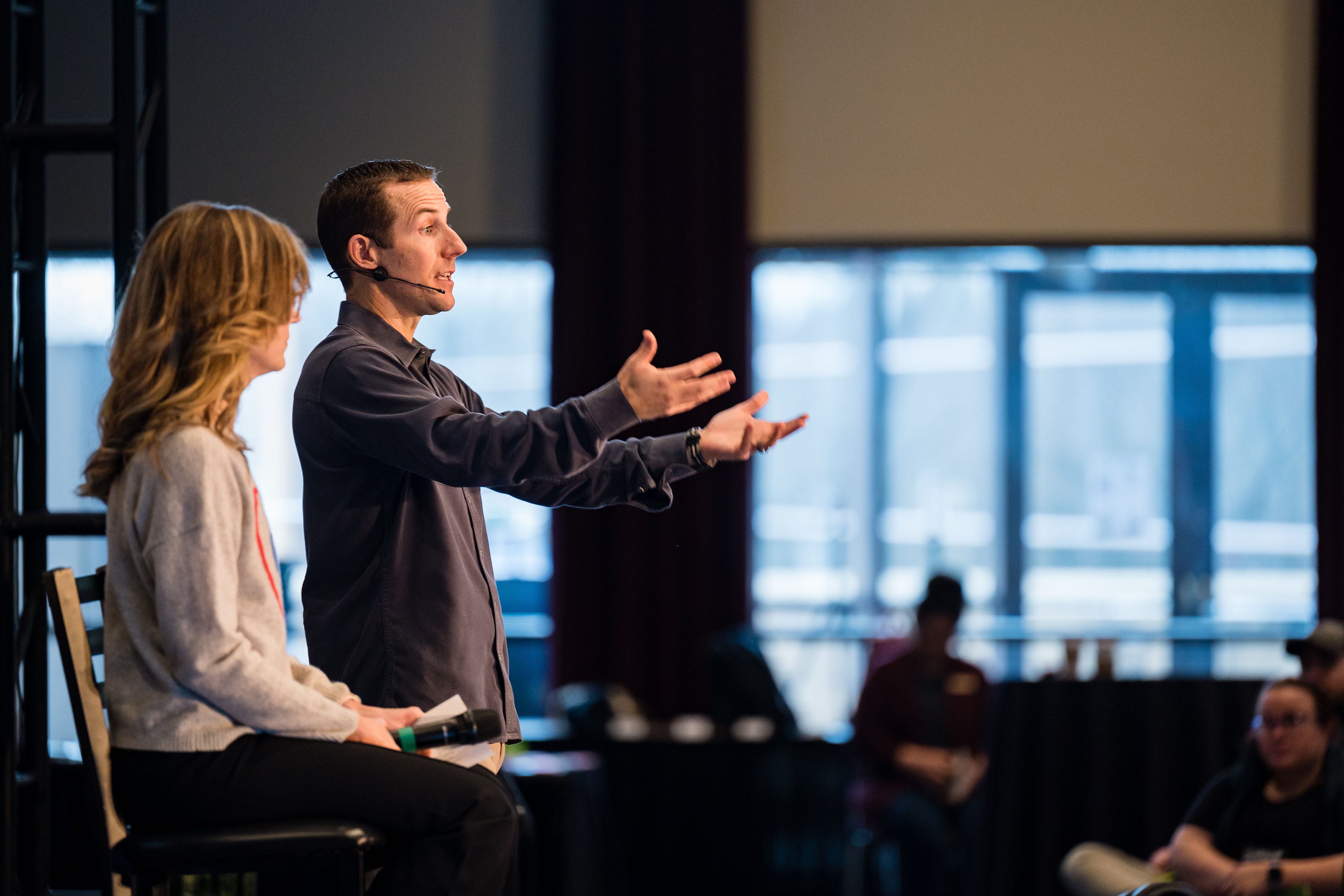
Here is something that’s changed for me over the years.
The moments I used to dread are the ones I now hope for.
When something goes sideways. When a question lands wrong. When a participant pushes back hard or the room goes somewhere I did not plan for.
High-stakes rooms test all of us in different ways. The room going sideways is not the problem. It is the moment the room wakes up.
When everything is going smoothly, a certain passivity settles in. People are present enough, but not fully alert. The moment something unexpected happens, every person in the room concentrates. Their attention sharpens.
In that window, trust either accelerates or it does not.
What determines which way it goes is not what you know. It is how regulated you are in that instant.
If you’ve done the work when nobody was watching, the reflection, the preparation, the honest reckoning with your own reactivity, then in that moment you can breathe. You can honor what is happening instead of fighting it. You can say, thank you for bringing that in, and mean it.
That is the only way to be ready. You have to have already done the work before you walked through the door.
Process, we can learn. Question design, we can practice. Instructions, we can refine.
Presence is something else.
Here’s what I try to remember. Whatever comes out of your mouth in a facilitated room, make sure it is tethered to some place in your heart.
In practice, that means this.
The families navigating hard conversations. The leadership teams carrying weight they do not always name. The rooms full of people who came hoping something might shift.
They are just humans. And so are you.
Anyone who’s ever given you a room to facilitate has given you something. They’re letting you live your purpose.
When you hold that, something changes in how you move through the room. The care becomes visible. The attention you give each person becomes real rather than performed. And what I’ve found to be true over many years of this work: when you do everything with genuine care and compassion, that will make up for the instruction you fumbled, the question that did not land, the moment that went sideways.
People feel it. They hear it. They remember it long after they’ve forgotten everything else.
Stay curious,
Jon
P.S. If this resonates, come experience it in person. Join our next free two-hour intro workshop. It is our experiential introduction to Conscious Convening, and it's the best way I know to feel what this work is actually like from the inside. Bring a friend. Be ready to engage. Over 25,000 people from around the world have joined us over the last five years, and I still love every room.